
Many North Vancouver homes were built decades ago, long before today's building codes, energy standards and expectations of how a home should work. If you love your lot and your neighbourhood but not your house, you've probably asked yourself whether to keep renovating or tear it down and start again.
A knockdown and rebuild means demolishing your existing home and building a new one in its place, on the same lot and at the same address, designed around how you live now. For many North Shore families, it's the most practical way to get the home they want without leaving the neighbourhood they love.
This guide covers the signs that a rebuild makes sense, how it compares to renovating, what the knockdown process involves, how permits work in North Vancouver, and what to expect for timelines.
Signs It's Time to Knock Down and Rebuild
Not every older home should be torn down. These signs suggest a rebuild may give you better value than another renovation:
The layout doesn't work. Small, closed-off rooms, awkward split levels or a poor connection between the kitchen, living space and yard are hard to fix without major structural changes.
Several systems are at the end of their life. When the roof, windows, electrical, plumbing, insulation and heating all need replacing at once, the renovation budget starts to look like a new-build budget.
There are structural or foundation problems. Settling, water intrusion and outdated foundations can make major renovations risky and expensive.
The house doesn't suit the lot. Many older North Shore homes ignore their best features. They turn away from views, sit in the wrong spot for sunlight, or fail to connect with the backyard.
You want more space or more homes on the property. A rebuild is the easiest time to add a secondary suite, plan for a coach house, or design for multi-generational living.
If two or three of these sound familiar, it's worth getting a proper comparison of rebuilding versus renovating before you commit to either.
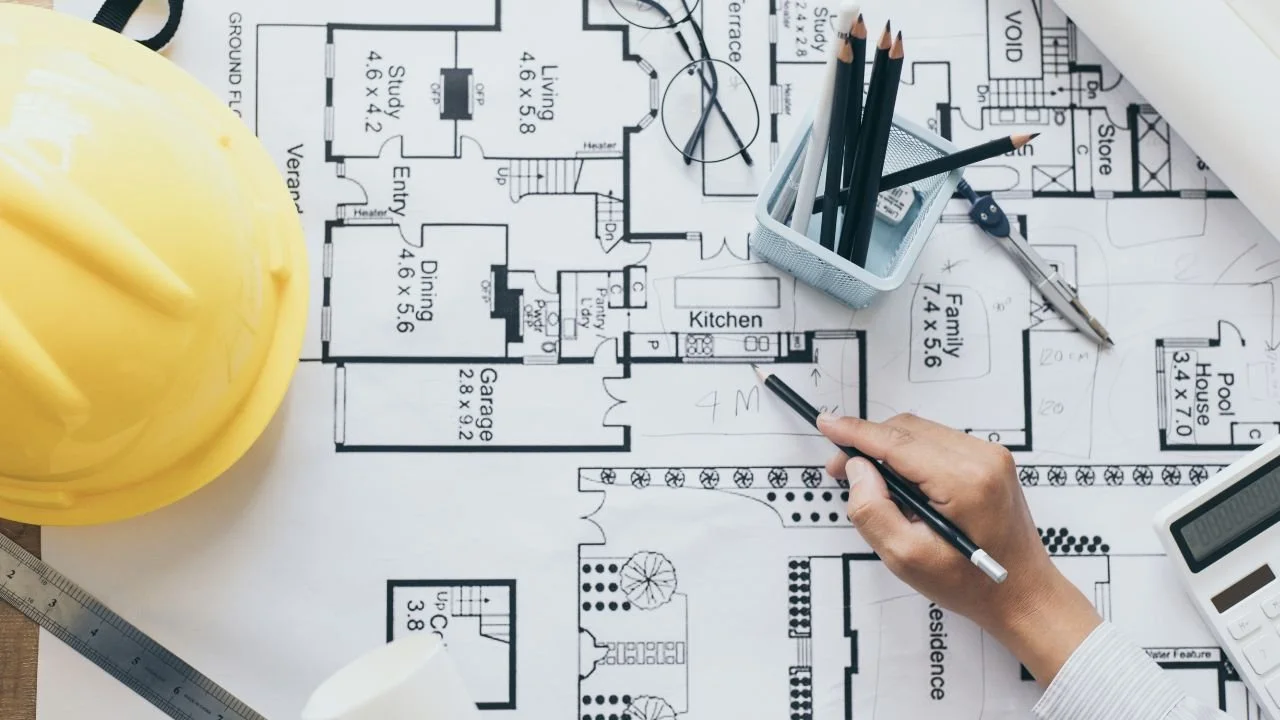
Knockdown and Rebuild vs Renovation
Renovations make sense when the bones of the house are good and you're mainly updating finishes, kitchens and bathrooms. But once a renovation involves moving walls, replacing major systems and upgrading the structure, costs rise quickly. You can also uncover surprises such as rot, outdated wiring or asbestos that push the budget further.
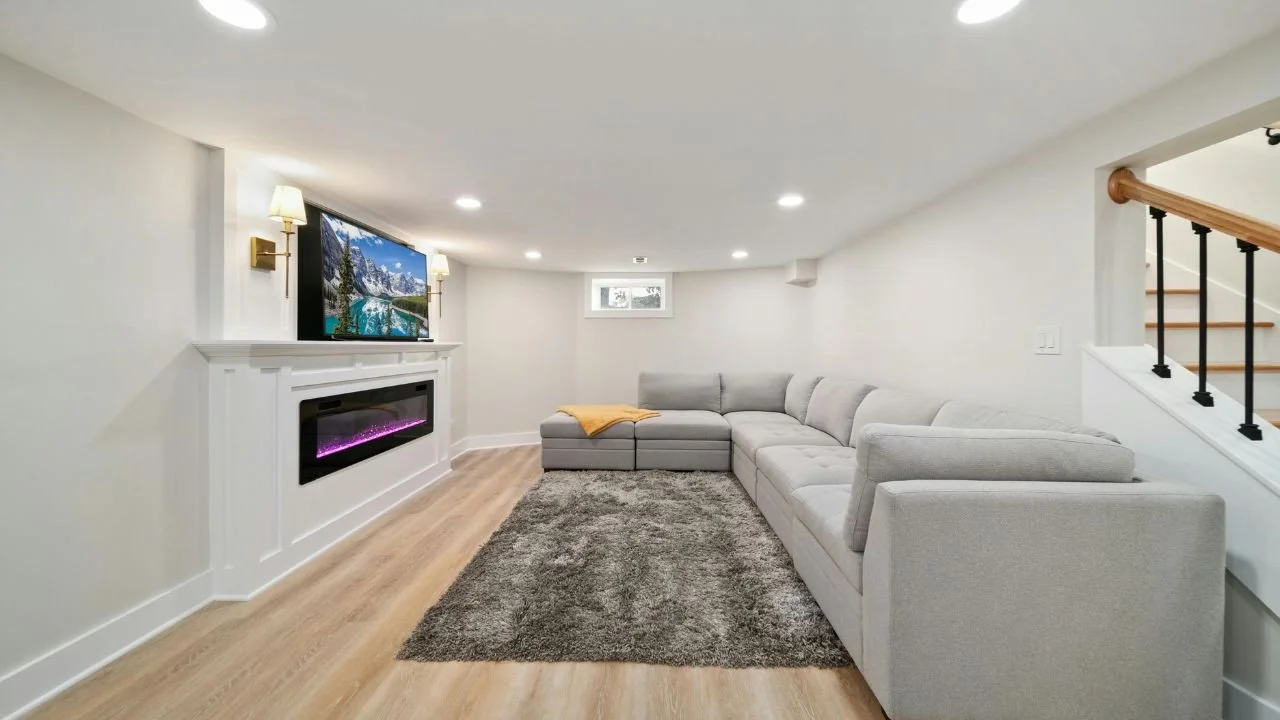
A knockdown and rebuild removes most of that uncertainty. You start with a clean site, a full set of drawings and a fixed scope. The result is a brand-new home built to current code, with modern insulation, windows and mechanical systems, and a new home warranty to back it.
The trade-offs are that a rebuild usually takes longer than a renovation, you'll need somewhere else to live during construction, and the upfront cost is typically higher. For a deeper look at weighing the two, read our guide: Should I rebuild my home or renovate it?
What the Knockdown Process Involves
The demolition itself usually takes only a few days, but a lot of planning comes before it.
1. Feasibility and design. Before anything is torn down, your builder and designer confirm what the lot allows: setbacks, height limits, floor area, any slope, creek or tree constraints, and how many units you can include. Your new home is then designed and priced.
2. Hazardous materials testing. Older homes often contain materials such as asbestos in drywall compound, flooring, insulation or siding. A hazardous materials survey is needed before demolition, and any hazardous materials found must be safely removed by qualified contractors first.
3. Utility disconnections. Gas, hydro, water, sewer and telecom services all need to be disconnected and capped before demolition. Some of these require coordination with the utility provider or the municipality.
4. Demolition permit and site protection. With the demolition permit in place, the site is fenced. Trees that are being kept are protected, and erosion and sediment controls are set up, which is especially important on sloped North Shore lots.
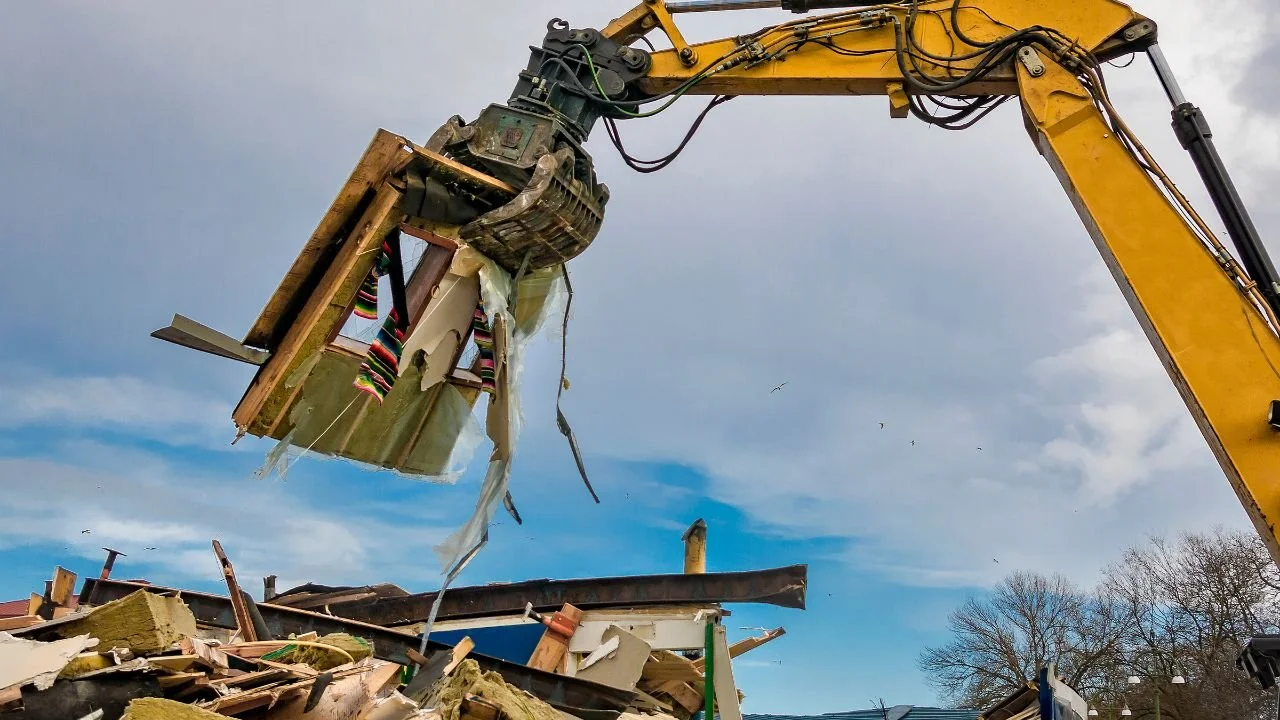
5. Demolition and site preparation. The house is taken down and debris is removed. Much of the wood, metal and concrete can be recycled. The site is then excavated and prepared for the new foundation.
When one builder manages all of these steps, there are no gaps between separate demolition, abatement and construction contractors. That's one of the biggest advantages of using a single team for a knockdown and rebuild in North Vancouver.
Permits in the City vs District of North Vancouver
North Vancouver is split into two municipalities, the City of North Vancouver and the District of North Vancouver, and each has its own zoning bylaw, permit office and requirements.
City of North Vancouver. The City covers the central area around Lonsdale and its surrounding neighbourhoods. It has recently updated its zoning to allow more homes on many former single-family lots, so a rebuild here may be an opportunity to include additional units. Learn more about our work in Lonsdale.
District of North Vancouver. The District covers areas like Lynn Valley, Edgemont, Deep Cove, Blueridge and Capilano Highlands. Many District lots are on slopes, near creeks or surrounded by mature trees, which can add requirements such as geotechnical reports, arborist reports, tree permits and environmental review.
In either municipality, you can generally expect to need a demolition permit and a building permit, along with any reports your lot requires. Permit timelines vary with the complexity of the project and the municipality's workload, so building permitting into your schedule from the start is essential.
Planning for a Suite or Coach House
A rebuild is the best time to think beyond a single-family home. Adding a secondary suite or coach house is far simpler and more cost-effective during a rebuild than it is to retrofit later.
Families use these extra spaces in many ways: as rental income to help offset the build, as a home for aging parents, or as a first place for adult children. In the District of North Vancouver, most single-family lots currently allow a main house, a secondary suite and a coach house. In the City, the updated zoning may allow even more units on eligible lots.
If you're interested in adding a coach house as part of your project, see our North Shore laneway homes page.
Timelines and What to Expect
Every project is different, but a typical knockdown and rebuild in North Vancouver follows this sequence:
Design and pricing: Developing plans and a detailed proposal, usually over several weeks to a few months depending on how many revisions you make.
Permitting: Anywhere from a few weeks to several months, depending on the municipality and your lot.
Demolition and site preparation: Typically a few weeks, including hazardous materials removal.
Construction: Most new homes take between 6 months and 1.5 years, depending on size, complexity and site conditions.
At Powell Contracting, every new build includes a fixed-price contract, a dedicated project manager and a 2-5-10 year new home warranty. To see the kinds of homes we build, explore our custom home builds on the North Shore.
FAQ
Is it cheaper to knock down and rebuild or to renovate?
It depends on how much work your current home needs. Light renovations are usually cheaper, but once you're replacing major systems, changing the layout and fixing structural issues, a rebuild often provides better value, along with a new home and warranty.
How long does a knockdown and rebuild take in North Vancouver?
Most new homes take 6 months to 1.5 years to build, plus time for design and permitting. A site visit is the best way to get a realistic timeline for your lot.
Do I need to move out during a knockdown and rebuild?
Yes. Because the existing house is demolished, you'll need alternative accommodation from demolition until your new home is complete.
Does my older home need to be tested for asbestos before demolition?
Yes. Older homes need a hazardous materials survey before demolition, and any asbestos or other hazardous materials must be removed safely first. Your builder can arrange this.
Can I add a suite or coach house when I rebuild?
In many cases, yes, depending on your lot and which municipality you're in. A rebuild is the most cost-effective time to plan for extra units.
Can I keep the trees on my lot?
Often, yes. An arborist can identify which trees can be protected during construction, and the new home can be designed around them. Some municipalities require permits to remove larger trees.
Thinking about a knockdown and rebuild in North Vancouver? Contact Powell Contracting for a free site visit, and we'll help you decide whether rebuilding is the right move for your home.
